
How to Scale SEO for SaaS- Novalab SEO Agency Guide
How to scale SEO for SaaS is a key topic for software firms that want long term signups without depending on paid ads. Search grows reach over time by putting a product in front of buyers who are already searching for help. Growth in SaaS depends on steady new trials, upgrades, and customer retention, and organic search supports all three. This guide explains how to scale SEO for SaaS by building structure, expanding content, strengthening links, and supporting product launches. It also brings in examples of where Novalab SEO Agency helps teams move faster without adding full internal staff.
Schedule a Free CallWhy SEO Matters for SaaS Growth
SaaS companies rely on recurring payments. A user who signs up today may keep paying for months or years. That means every organic lead has long-range value. Search attracts people who already have questions. They may be trying to solve a work problem, find a better way to do a task, or replace a tool that no longer fits their needs. Paid ads bring traffic right away but stop when spending is paused. Search keeps pulling new users once the content ranks.
Recurring Value of Users from Organic Search
Once a SaaS brand learns how to scale SEO for SaaS, traffic compounds. Articles bring in searchers, who try the product. New customers then upgrade, share access with teams, and act as references. When search grows, budgets for paid ads can shift to other channels, bringing higher margin growth.
Competition Pushes Firms Toward Scale
SaaS is crowded. It is common for ten or more tools to chase the same user group. Teams that publish sporadically disappear from search. To scale SEO for SaaS, brands must expand topic coverage, connect pages to product features, and build trust. The companies winning search today usually run systems, not one-off posts.
Set the Foundation Before Scaling SEO
Scaling before fixing the site wastes effort. SaaS leaders should confirm that engines can read core pages, track conversions, and reach landing pages without blocking scripts.
Audit for Technical Gaps
A technical audit shows whether the site supports growth. Common issues include slow pages, duplicate titles, old landing pages from retired campaigns, missing metadata, heavy javascript, and internal links that stop short of product paths. SaaS sites often use modern front-end frameworks, which can hide content from crawlers if not configured carefully. Fixing those gaps early removes barriers that might limit growth later.
Install Tracking That Maps to Revenue
To scale SEO for SaaS, teams need to see beyond traffic volume. Metrics must show:
- where trials come from
- which topics drive demos
- which pages bring qualified users
- where users bounce
- whether organic customers stay longer
Without this, companies write content without guidance. With it, they know which clusters deserve further work.
Define the Buyer and Message
SaaS tools often serve many roles. A project manager, administrator, and financial analyst may all access the same product but with very different goals. Scaling SEO requires content that speaks to these differences. Teams must lock down:
- the core job users want to complete
- the problem keeping them from success
- the gap between their process today and the product’s benefit
This informs keyword research, landing pages, and topical maps. Without it, content feels generic and fails to convert.
Keyword Strategy for SaaS Scale
How to scale SEO for SaaS begins with search intent across multiple stages. SaaS buyers shift from general questions to tool comparisons, and content must follow that path.
Top Level Awareness Terms
People begin by searching how to solve a problem. For example:
- how to track inventory with spreadsheets
- best ways to plan sprints
- steps to manage proposals
These searches show users who are not yet ready for software. Articles, guides, and templates are valuable here. The goal is not conversion; it is attention.
Middle Stage Product Searches
At this point users compare methods and start noticing tools. They search for:
- software for time tracking
- CRM that integrates with email
- workflow tool for agencies
These searches move closer to the product. Pages here should explain why old methods fail and how modern tools clear the roadblock.
Bottom Stage Intent Searches
This is the strongest group. Users know they need software and search with purpose:
- brand vs brand
- Alternatives
- pricing pages
- industry-specific tools
- feature-specific names
These pages convert best and should be prioritized early in the scale plan. When a SaaS team needs fast signups, focusing here often delivers results faster than publishing wide blogs.
Cluster Building for Depth
Scaling content means forming groups of pages around central topics. A hub article introduces the subject. Supporting pages answer related questions, like workflows, best practices, alternatives, and comparisons. Internal links connect the group. Over time, that grouping builds trust with engines and users. Novalab SEO Agency helps SaaS teams map these clusters so content grows in a structured order, not random bursts.
Product-Led Content for SaaS Conversions
Search brings users to the door. Product-led content encourages them to take the next step. SaaS companies must show how their product solves the problem described in the article.
Teach First, Offer After
A page must earn trust. Users land because they want clarity. If content sells too fast, readers leave. Strong product-led content explains the manual approach, shows gaps or risks, then illustrates how the product solves those weak points. Because the user now understands the task, the product feels like a natural step.
Role Pages and Industry Paths
Roles approach software differently. A project manager might care about scheduling tasks, while an executive may care about reporting. Industry verticals might use the same software in unique ways. Creating role pages and sector pages helps convince users who see their world reflected.
Templates as Entry Points
Free templates, calculators, and checklists often act as bridges. They solve part of the job for the reader and build trust before purchase. The user returns when the template becomes limiting and considers the software that inspired it. This is a proven path used across SaaS teams that scale search.
Scale Content Production With Systems
To scale SEO for SaaS, firms must move beyond small output levels. Content volume grows only when teams follow routines.
Systems Drive Consistency
Topic planning, keyword mapping, briefing, editing, approval, and publishing must follow steps. This prevents bottlenecks when multiple drafts are in progress. Without systems, writers slow down and editors lose track of what matters most.
Writers Must Know SaaS
SaaS content requires clarity and accuracy. Writers need to understand feature names, workflows, signup processes, and customer objections. They need to review the tool firsthand. Many teams rely on Novalab SEO Agency to scale output because the writers already have experience in product-driven content.
Build a Multi-Format Calendar
A full calendar includes long guides, FAQ pages, case stories, integration pages, feature breakdowns, and comparison pages. Different page types serve different stages of the buyer path. This spread increases coverage and keeps traffic flowing across funnels.
Technical Work That Supports Scale
Scaling search for a SaaS platform requires a strong technical base. Engines cannot rank what they cannot reach, and SaaS sites often introduce blockers without noticing. Apps, landing pages, and knowledge bases may sit across subdomains and frameworks. Before expanding content, companies must make sure engines can crawl, index, and interpret pages.
Crawl Access and Site Speed
SaaS pages often include tracking tools, product scripts, dashboards, and gated areas that can slow load times. Search engines favor fast sites. Anything that delays rendering reduces reach. Removing heavy code, shifting resources to load later, and clearing duplicated scripts creates a cleaner experience for users and crawlers.
Site maps should reflect all public content. SaaS teams sometimes forget new feature pages or archive them without redirect rules. Good files give engines the clearest possible road map. Strong internal linking also guides crawlers through fresh clusters and prevents new pages from becoming isolated.
Fixing Structural Weak Points
Old campaign URLs, staging leftovers, and duplicate pages waste authority. Scaling means trimming waste and strengthening the pages that support trial signups. Redirecting weak assets into stronger hubs combines signals instead of splitting them.
URL logic matters as content grows. If dozens of blog posts follow different structures, engines and users struggle to find related material. Clean grouping by category makes content easier to crawl and interpret.
Landing Page Templates
SaaS products add features and adjust flows often. A single template change can lead to hundreds of outdated pages. To scale SEO for SaaS, teams should standardize page layouts so titles, headings, and key sections appear in the same place. This also speeds publishing when new features launch because teams plug content into a proven model rather than build each page from scratch.
Authority and Link Building for SaaS Growth
Content scales awareness. Links scale trust. Engines watch which sites reference a SaaS product and what context supports those links. Without link growth, clusters plateau. Link programs do not need to focus on volume. Method and consistency matter more.
Partnership Programs
SaaS tools rarely live alone. They connect to CRM platforms, email tools, storage systems, and project platforms. When two tools work together, both companies benefit from cross-promotion. Co-written guides, shared webinars, and integration announcements often produce natural links. This is one of the strongest paths for early SaaS growth because partners share similar audiences.
Publications and Thought Leadership
Subject matter content that answers industry questions often earns attention from publishers. When SaaS companies share surveys, benchmarks, templates, or research, reporters and analysts link back. These links signal authority and grow cluster power faster than low-quality tactics.
Novalab SEO Agency supports SaaS clients by planning outreach calendars, speaking with publishers, and recommending anchor resources that stand up over time.
Product Visibility in Lists
Many buyers search for “best tools for X” or read roundups. Getting listed in those articles increases trust. Companies can approach editors, offer case outcomes, or suggest data that sets their tools apart. With no outreach plan, most SaaS brands rely on chance and fall behind faster-growing rivals.
Evergreen Link Assets
Some resources generate links year after year. These include:
- annual checkups or state-of-the-industry reviews
- glossaries that define core terms in the niche
- comparison tables for pricing and feature sets
- deep guides that solve a common pain
Once these pages rank, other sites pull them into articles when explaining related concepts.
Internal Linking for SaaS Scale
Internal linking is a powerful method in scaling SEO. It takes existing authority and distributes it across the site. SaaS companies often publish new posts without linking them back to core pages. That leaves value on the table.
Clear Hub and Spoke Patterns
A hub page holds the core idea. Supporting articles link back to it. This pattern signals structure. New pages should always link to their closest hubs. Hubs should link outward to their strongest supporting material. This is simple but often overlooked.
As the site grows, internal linking sessions help identify holes. Revisiting old pieces and adding links to newer assets strengthens relevance and boosts pages that need help moving up the rankings.
Conversions Through Linking
Internal linking also affects revenue. High-traffic articles should link directly to product pillars and trial pages. These links serve as the introduction to the platform for users who arrive early in their research.
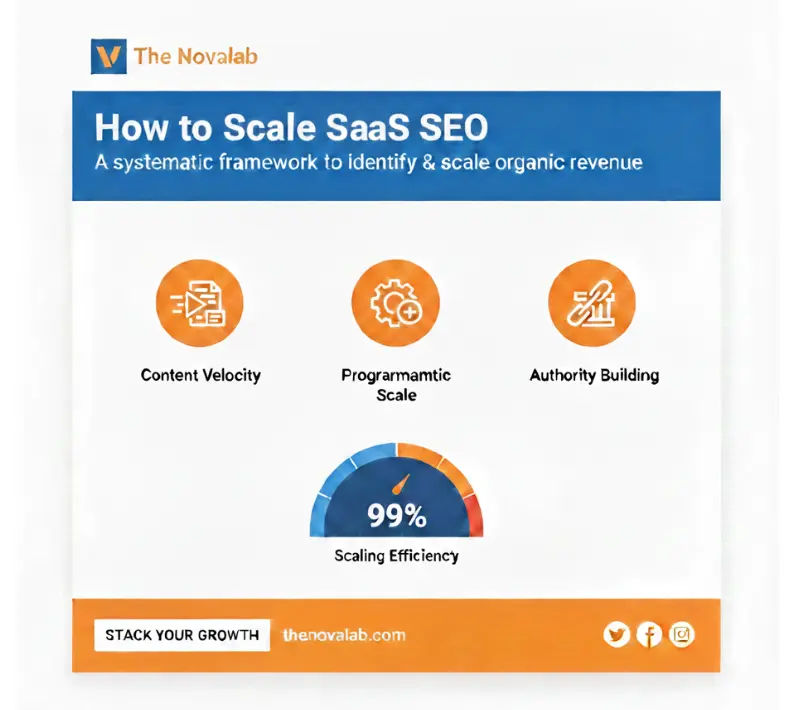
Content Refresh Cycles
SaaS changes fast. When products shift, pricing updates, or workflows evolve, pages must reflect that shift. To scale SEO for SaaS, teams cannot rely only on publishing new work. They must strengthen what has already been built.
Update Content to Stay Competitive
Over time, pages lose accuracy. Rival brands may enter the market or cover the subject with more detail. Refresh cycles include rewriting intros, extending sections, adding screenshots from the current interface, and updating stats and examples. An updated page with new internal links and fresh clarity often leaps forward in rankings faster than a brand-new draft.
Combine or Retire Weak Pages
If several pages target the same keyword theme, they compete against each other. Merging pages into a single authoritative piece avoids splitting traffic. Redirecting secondary pages strengthens the new version.
Plan Refreshing on a Schedule
Instead of waiting for traffic drops, SaaS teams should set a calendar. A quarterly review gives time to monitor ranking changes and adjust the most important assets. When scaling, content volume rises, and these reviews keep the library healthy.
Scaling Across Regions and Languages
Many SaaS firms outgrow a single market. Scaling search across borders introduces fresh opportunities and new challenges. The same keyword that succeeds in one region might fail in another due to phrasing, regulations, or buyer culture.
Local Research Over Direct Translation
Direct translation rarely works because different markets often search for tasks in different ways. Teams must research demand in each region and write content for that audience. Local pricing pages, testimonials, and examples build trust.
Website Signals for Local Markets
Search engines use hreflang signals to serve the right language to users. Without correct signals, pages may rank in the wrong regions or fail to appear anywhere. Teams should also localize metadata and structure their content library so regional pages stay organized.
Novalab SEO Agency supports clients through multi-region expansion by shaping keyword maps for new markets, aligning structure across languages, and helping teams build new content faster.
Paid Search Working With Organic
Paid and organic search need not compete. They share insights and build stronger funnels when aligned.
Paid Data That Guides SEO
Paid campaigns identify which keywords bring qualified leads. Instead of guessing which subjects convert, teams can review paid results and expand high-performing themes into organic clusters. This reduces waste and helps the content team make smarter decisions.
Lowering Paid Spend Through Organic
As content ranks, SaaS firms can shift budgets away from terms that perform organically. This lowers customer acquisition cost. The result is more spending freedom to test new regions, new terms, or new audiences.
Paid and organic working side by side help SaaS firms scale faster than either channel alone.
SEO, Product Teams, and Customer Success Working Together
Scaling SEO for SaaS is not only about marketing. Product planning, customer education, and success programs all influence rankings in indirect but important ways. When teams share knowledge and timing, search performance improves and content becomes much more useful.
Plan SEO Around Feature Releases
SaaS products evolve constantly. Features expand, workflows change, integrations appear, and pricing models shift. If new features release without supporting content, search engines have no signal to pick up and users receive little direction. Teams should involve SEO staff early in roadmaps. Content writers and strategists can prepare landing pages and explainer pages before release. When the feature goes live, the page already exists and can rank sooner.
When learning how to scale SEO for SaaS, teams should remember that a new feature is a keyword opportunity in itself. Users are always searching how to solve problems that the feature addresses. With planned publishing, SaaS firms take that traffic rather than ceding it to blogs and communities.
Support Documentation as a Growth Engine
Documentation is often seen as internal support material, yet help centers and knowledge bases can drive search visibility. How-to pages, tutorials, and troubleshooting content answer real queries users type into search bars. Many SaaS companies fail to link documentation into their cluster plans, leaving valuable resources buried deep in the site.
When help center content is indexed and linked from clusters, it helps users before they trial the product. It also supports mid-funnel searches where readers want to see how a workflow functions. Including this material in a SaaS search plan expands reach and improves trust with users ready to evaluate products.
Customer Success Teams Provide Domain Insights
Teams that handle onboarding and troubleshooting speak with customers daily. They know where users get stuck, what tasks matter, and what pains occur most often. This is a source of topics that keyword tools often miss. SaaS companies that scale SEO connect these front-line teams to content planners.
Questions logged during onboarding can become FAQ blocks or how-to articles. Complex workflows that stump new users can turn into step-by-step guides. By listening to customers, content solves real problems and brings motivated prospects from search.
Churn Prevention Through Search Content
Retention is a quiet partner to acquisition in the SaaS world. When customers stay longer, every signup becomes more valuable. SEO plays a role here. Pages that teach advanced workflows, best practices, and team management help users succeed with the tool. Users that master the product stick around, upgrade licenses, and expand usage to more staff.
SEO-driven content that supports onboarding can reduce churn, shortening feedback loops between content effectiveness and growth outcomes. When SaaS leaders understand how to scale SEO for SaaS, they see that search supports all lifecycle stages, not just top-of-funnel reach.
Hybrid Search Teams That Drive Scale
Most software companies cannot handle all search tasks with only internal staff. Technical work demands focus. Publishing requires constant energy. Outreach needs relationship time. A hybrid setup combines strengths from both inside and outside.
Internal Teams Define Voice and Strategy
Internal staff understand the product best. They sit with sales, receive customer feedback, and absorb the subtle details that set the product apart. They can review content for accuracy, align messaging with launches, and maintain the voice of the brand. This makes internal oversight essential for meaningful SaaS content.
Outside Teams Expand Capacity
Scaling requires execution at a pace most SaaS companies cannot sustain alone. Outside teams, such as Novalab SEO Agency, take responsibility for keyword discovery, audits, content planning, research briefs, writing, and outreach. They support the in-house team without increasing headcount too fast. Outside teams can scale work up or down without hiring cycles or training gaps.
Shared Reporting and Shared Goals
Communication links internal and external groups. Shared dashboards track trials, traffic, and rankings. Weekly or bi-weekly syncs keep priorities clear. Each side moves faster when responsibilities are defined and roadblocks are surfaced early.
The result is a machine that keeps publishing, improving, and reporting until momentum builds.
When to Bring Novalab SEO Agency Into the Plan
While some teams start internal programs from scratch, others reach a breaking point and need help. Knowing when to expand capacity becomes a key part of understanding how to scale SEO for SaaS.
Signs That an Outside Partner Is Needed
Several patterns signal that a SaaS firm may need help:
- Publishing slows due to limited writers
- Rankings rise and then stall without explanation
- The site has many pages, yet few convert
- Search data shows demand, yet pages remain unwritten
- Teams lack clear reporting on organic revenue
- New features launch without linked content
- Link growth is irregular or nonexistent
These issues often come from bandwidth shortages rather than strategy failures. An outside partner fills gaps.
How Novalab Supports SaaS Scale
Novalab SEO Agency works with SaaS brands across the growth curve. For early-stage teams, Novalab builds the first keyword maps, performs technical audits, and sets publishing patterns. For later-stage teams, Novalab scales production, expands clusters into new verticals, and supports link campaigns.
The agency can take on writing, research, technical direction, and outreach at the pace the brand needs. This avoids long waits while hiring or training internal staff.
Speed to Value
Hiring a team may take months. Training takes longer. An agency already knows how to scale SEO for SaaS because it has seen hundreds of setups across markets. With an outside partner, results start sooner, and internal staff focus on product and customer work.
Metrics That Prove True Search Scale
Traffic alone does not tell the whole story. SaaS firms need conversion-focused metrics that show whether SEO supports growth. When leaders know what to look at, they spot gaps earlier.
Organic Trials and Demo Requests
These are the strongest signs of search value. If traffic rises while trials fall flat, page topics may not match user intent. When trials rise with traffic, content is attracting buyers rather than readers.
Pipeline and Lead Quality
As clusters mature, SaaS firms see changes in how leads behave. Marketing-qualified leads become more common. Sales need less time explaining basic features. Strong content sends leads deeper into the funnel before they ever submit a form.
Branded Search Lift
As a SaaS brand becomes visible across many topics, users begin searching for the company by name. This is often the clearest indicator that search has earned mindshare in the market.
Lower Customer Acquisition Cost
Paid ads push customer acquisition costs upward. Organic search lowers them. When teams understand how to scale SEO for SaaS, they track the difference between cost per lead from search versus paid. When the organic channel grows, SaaS firms can reallocate spend and expand.
Customer Retention Support
Content that teaches advanced workflows or use cases pushes customers to get more value from the product. As users adopt more features, churn decreases. This improves lifetime value and strengthens the SaaS model.
What Scaling Feels Like When It Starts Working
Teams know scale is taking hold when certain patterns emerge. Content pipelines move smoothly. Launches include SEO plans. Help desk teams send fewer repetitive requests because top pages answer frequent questions. New user numbers rise without spikes in paid ads. Charts shift gradually rather than in big jumps.
Stronger Market Presence
Done well, search draws attention from analysts, partners, media, and even competitors. New startups may mention established SaaS firms as benchmarks because search visibility gives the impression of category leadership.
More Content and Less Stress
Once systems are running, publishing becomes easier. Writers know what topics matter. Briefs arrive in better shape. Editing turns into polishing rather than rewriting. Teams stop guessing and start executing.
Long Term Discipline for Sustainable SaaS SEO
Scaling search is not a single sprint. SaaS firms that get ahead stay ahead by keeping steady rhythms. Markets change, competitors publish new pages, and search preferences shift. Teams that treat SEO as a recurring cycle adapt and keep momentum.
Content Velocity with Quality Guardrails
Publishing more pages increases visibility, but only when quality is upheld. SaaS content becomes shallow when writers move too quickly or lack guidance. Style sheets, content checks, and reader feedback keep material grounded in usefulness.
Writers should return to the product as features change. Screenshots need updates. Feature paths change. When content stays true to the current product experience, users trust it and value the information.
Research Never Ends
Keyword research does not stop once clusters are built. Search behavior changes as industries adopt new methods. Tools that were niche last year may become mainstream. SaaS firms that scan trends once per quarter can adjust, plug holes, and grab early advantage.
Tracking competitor updates reveals blind spots. If rivals publish fast on emerging subjects, a SaaS firm may need to accelerate its own plan.
Stay User-Driven
Users often describe problems differently from how SaaS marketers describe solutions. Search terms may include spelling variations, slang, or workflow shorthand. Listening to chat logs, customer support calls, and onboarding questions keeps content grounded in real language.
User-driven content builds stronger topic clusters because every page serves a verified need rather than an assumption.
Building Durable Topic Ecosystems
A single topic cluster creates visibility. Dozens create authority that reaches into new categories. When SaaS companies scale well, they end up with ecosystems across multiple themes.
Core Clusters Based on Product Value
Most SaaS tools solve a handful of core problems. Those problems become the first clusters. Strong early clusters bring in reliable search volume and introduce users to trial pages.
Expansion Through Feature Growth
As products grow and add features, each new capability introduces search terms. These smaller themes add breadth and deepen the company’s reach. When a SaaS platform adds new integrations, it opens new keyword avenues that connect to partner users as well.
Industry and Role Trees
Industry clusters show how the product fits different types of companies. Role clusters show how various professionals use the product in their daily tasks. These clusters often convert faster than broad ones because audiences see themselves reflected in the page.
Secondary and Support Clusters
Support content often brings long tail traffic. Troubleshooting guides, how-to walkthroughs, and task-focused answers help searchers who are near conversion or already midway through onboarding. These clusters feed retention and create a loop of helpful content.
Multi-Stage SEO Maturity in SaaS
SaaS companies grow through stages in their search maturity. Knowing what stage the company occupies helps teams plan next steps and avoid trying to scale before the foundation is ready.
Stage One: Awareness and Survival
At this earliest point, the site may have a handful of posts and limited structure. Rankings are rare and traffic arrives through brand searches. Firms at this stage should build core pages, audit the site, and map bottom-of-funnel content first.
Stage Two: Growing Presence
Here the company publishes at a steady pace. Clusters take shape. Lead quality improves. Teams begin to see which subjects matter most. Internal linking, page refinement, and template improvements start to pay off.
Stage Three: Scaling Systematically
This is where systems take over. SaaS brands publish many articles per month. Documentation pairs with blog material. Link programs run on a schedule rather than bursts. New markets open. Content refresh cycles are predictable.
Stage Four: Market Influence
In the most mature stage, the brand controls many ranking positions. Search becomes one of the largest drivers of pipeline. Competitors reference the company in their own content. The SaaS firm launches new clusters with confidence and enters new markets faster than younger businesses.
Knowing how to scale SEO for SaaS means knowing how to move from stage to stage without losing momentum.
Leadership Support Makes Scale Possible
SEO success depends on commitment. SaaS firms need leadership buy-in to unlock resources, grant engineering support, and maintain focus.
Budget Spread Over Multiple Functions
SEO touches writing, design, product, customer success, engineering, and data teams. Successful companies support these areas with time allocation, tools, and recurring reviews. Without structured support, SEO becomes a side project and fails to scale.
Internal Communication
Content calendars and launch plans must be visible to the full team. When milestones are shared, everyone knows when to contribute. Engineering teams help with redirects and code fixes. Designers produce graphics for clusters. Sales and customer success offer topic suggestions.
Review Rhythms
Monthly or quarterly reviews help leadership see what search programs deliver. Reports tied to revenue speak louder than traffic charts. When leaders understand trends and results, they commit more resources, and scale accelerates.
How to Scale SEO for SaaS With Novalab SEO Agency
Novalab SEO Agency supports software firms that need structure, volume, and clarity. The agency partners with SaaS companies at all maturity levels.
For Early Stage SaaS
Novalab helps define the keyword roadmap, fix urgent technical gaps, and build the first clusters. Early wins build confidence and support later expansion.
For Growth Stage SaaS
Novalab increases content volume across top, mid, and bottom funnel topics. It expands clusters, adds industry and role pages, and supports documentation sync. Teams gain the speed needed to outpace rivals.
For Mature SaaS Firms
Novalab runs systematic refresh cycles, supports outreach programs, and tracks performance across markets. Global expansion and product launches move faster with an experienced partner.
Partnership, Not Replacement
Outside help supports internal teams instead of replacing them. Internal staff guide voice and context; Novalab handles execution and workload. Together they form a complete engine.
Conclusion: How to Scale SEO for SaaS With Confidence
How to scale SEO for SaaS comes from treating search as a repeatable system. SaaS firms that audit their site, map demand, publish useful pages, grow authority, update aging assets, and expand into new topics build organic programs that feed the business year after year.
Teams that focus on conversions rather than traffic see meaningful pipeline gains. Content becomes more than marketing; it becomes a revenue driver and a support tool for onboarding and retention.
Some SaaS companies handle all steps internally. Others work faster with help from partners such as Novalab SEO Agency. The strongest results come from teams that plan, publish, measure, refine, and keep moving forward without long pauses.
Scaling search rewards patience, structure, and action. Companies that commit to the process build a durable engine that feeds signups, demo requests, and long term revenue.
Start Growing With The Novalab SEO Agency
If you’re looking for an SEO agency that understands your goals and delivers real outcomes, The Novalab SEO Agency is ready to help.
We build strategies designed to grow your organic traffic, strengthen brand visibility, and convert visitors into loyal customers.
Contact our team today to request a free SEO audit or consultation.
Let The Novalab SEO Agency guide your business toward better rankings, more traffic, and consistent results.