
Content Marketing Strategies by NOVALAB SEO Agency
Content marketing strategies help you plan, publish, and distribute content that drives traffic, leads, and sales. The best content marketing strategies are built around clear goals, real search intent, and a process you can repeat. When you treat content as a system, you stop guessing and start building pages that earn clicks and bring in qualified prospects.
Start with one goal and one main metric
Choose one business goal for the next 90 days. That goal could be qualified leads, demo requests, trial starts, or ecommerce sales. Next, pick one main metric that shows progress toward the goal, such as organic leads, demo starts from organic sessions, or revenue from organic landing pages. A single focus keeps content marketing strategies grounded in results, not activity.
If you try to improve traffic, conversions, email subscribers, and sales at the same time, the plan turns into a long checklist. A focused target makes it easier to decide what to publish and what to postpone.
Use problems and intent instead of broad personas
Good content marketing strategies begin with the problems people want to solve. List the top problems your audience searches for, then group them by intent.
Informational intent means the reader is learning and wants clear explanations, steps, and examples. Commercial intent means the reader is comparing options and wants proof, pricing context, and alternatives. Transactional intent means the reader is ready to act and wants a direct next step.
When you map topics to intent, you avoid publishing articles that get visits but do not support pipeline or sales.
Build a problem library you can update
Create a simple document with three columns: problem, search intent, and the product or service that solves it. Add real phrases you hear on calls and in support chats. This library becomes the source for new topics, internal links, and content updates.
Choose a publishing model you can keep steady
Content marketing strategies fail when the schedule is not realistic. Pick a pace you can maintain. Publishing fewer pages can still work if you prioritize quality and updates. Publishing more pages can work if editing is fast and standards are clear.
Assign ownership so work does not stall. Decide who drafts, who edits, who approves, and who publishes. A clear workflow keeps deadlines from slipping.
Set page standards before writing
Define what a finished page must include. Set rules for structure, clarity, internal links, and one clear call to action. Consistent standards raise quality and reduce revision cycles.
Build topic clusters around outcomes
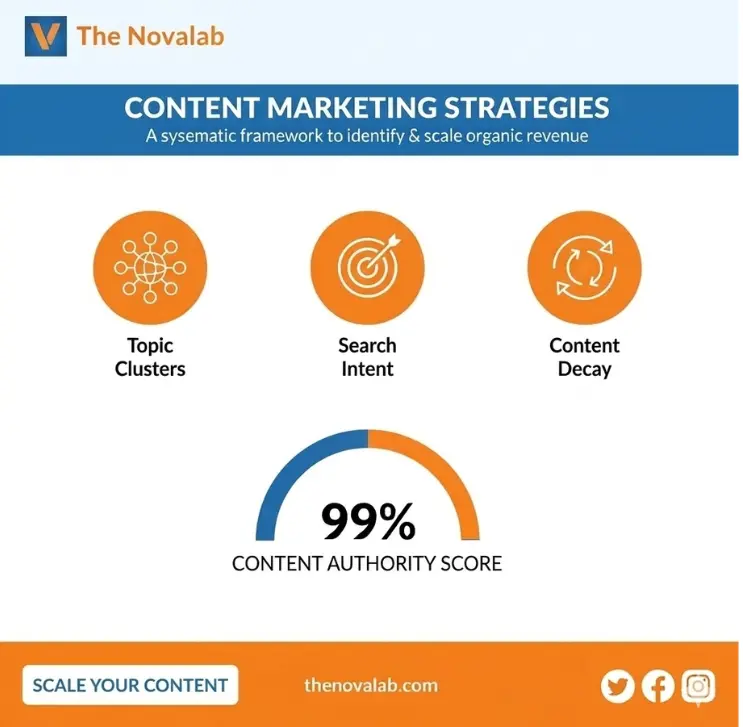
Topic clusters are a core part of content marketing strategies because they help you rank for a group of related searches. Choose one cluster tied to a business outcome. Create one main page that targets the broad query and supporting pages that target specific queries.
Clusters work because they build topical coverage and create natural internal links. They also create better user paths, so readers can move from learning to action without friction.
Use intent to shape the cluster
A strong cluster includes educational pages and evaluation pages. Educational pages earn visibility and trust. Evaluation pages capture leads by answering decision-stage questions like comparisons, alternatives, pricing context, and proof.
Match the content format to the query
Content marketing strategies work better when the format matches what the reader expects.
Guides work for “how to” searches. Comparison pages fit “X vs Y” searches. Alternatives pages fit “best” and “alternatives” searches. Case studies help when readers want proof. Templates help when readers want a starting point they can apply right away.
If the format does not match the query, readers bounce. If readers bounce, rankings and conversions suffer.
Plan distribution before you publish
A publishing plan without distribution is incomplete. Decide where the content will be promoted and how often.
Email helps you reach people who already know your brand. Social posts help you test angles and reach new audiences. Partnerships can bring referral traffic and links. Communities can work when you answer real questions and share a link only when it supports the discussion.
Distribution should be scheduled, not optional. When it is routine, content marketing strategies produce more consistent results.
Repurpose one idea into multiple assets
Turn one topic into a blog post, a short email, and a simple post for social. Repurposing reduces the pressure to come up with new ideas and keeps messaging consistent.
Add a refresh cycle to your process
Many pages drop because they become outdated. Content marketing strategies should include a refresh cycle from day one.
Track pages that bring leads or revenue. Update them first. Refresh examples, steps, screenshots, and internal links. Add supporting pages when you see repeated questions in search queries or sales calls.
A refresh is also a chance to tighten the cluster. A better cluster often outperforms a larger set of unrelated posts.
Measure outcomes with tracking that matches the goal
Measurement should match the goal you selected. If the goal is organic demos, track the demo starts from organic traffic by landing page. If the goal is sales, track revenue by landing page and by topic cluster. Use consistent rules so results can be compared month to month.
When tracking is unclear, teams chase views and miss what matters. Clear tracking keeps content marketing strategies tied to business outcomes.
Define success for each page before it is written
Assign one primary action per page. A guide might aim for newsletter signups. A comparison page might aim for demos. A template page might aim for downloads. A clear target improves writing, improves CTAs, and improves reporting.
Improve content with a feedback loop
Content marketing strategies improve when feedback is built into the process. Use search queries and page behavior to find gaps. Use sales calls, support tickets, and chat logs to learn how people describe their problems. Review competitor pages to understand what Google is ranking and what readers expect when they click.
Then publish content that reduces friction. Make it easier to scan, easier to trust, and easier to act on.
Strategy patterns that work across industries
Several content marketing strategies work in most markets because they match how people buy.
Problem-first content targets pain and creates demand. Comparison content targets evaluation and captures high-intent searches. Use-case content targets buyers who know what they want to do but need a plan. Proof content reduces risk and supports decisions.
A strong plan mixes these patterns across a single topic cluster so the site supports readers from early research through action.
Start Growing With The Novalab SEO Agency
If you’re looking for an SEO agency that understands your goals and delivers real outcomes, The Novalab SEO Agency is ready to help.
We build strategies designed to grow your organic traffic, strengthen brand visibility, and convert visitors into loyal customers.
Contact our team today to request a free SEO audit or consultation.
Let The Novalab SEO Agency guide your business toward better rankings, more traffic, and consistent results.