




Onboarding done in 24 hours
Kick-off, access, tracking and the first audit completed within 24 hours, so your SaaS product starts winning search on day one.
See the 24h onboarding →
SaaS buyers rarely convert on first contact. They research the problem, compare tools, read use cases and look for proof before they book a demo or start a trial. If your content is not there at each of those steps, a competitor's content is, and they get the demo request.
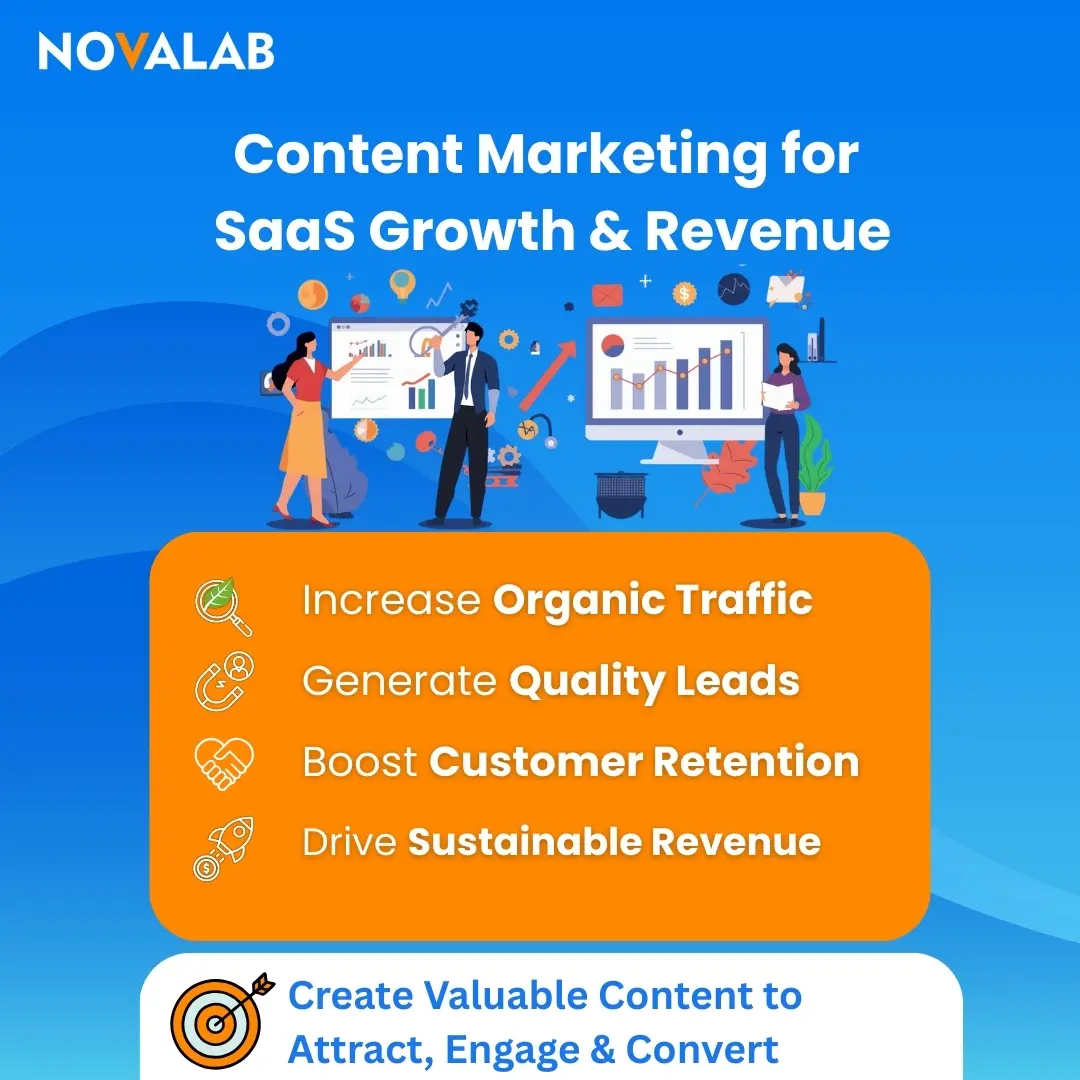
Novalab builds content marketing for SaaS as a structured growth system, not a publishing calendar. We map content to buyer intent, build topic clusters around your commercial pages and measure results in signups, demos and revenue. It sits inside a wider SaaS SEO agency approach that connects content, technical SEO and authority.
Kick-off, access, tracking and the first audit completed within 24 hours, so your SaaS product starts winning search on day one.
See the 24h onboarding →Every page targets one intent, from problem research to comparison to evaluation. Informational posts stop competing with the pages closest to a demo request.
See the approach →We tie content to signups, demos and assisted conversions, so you can see which pages lower CAC and which ones only collect traffic.
See how →Many SaaS companies publish consistently and still see limited results. The cause is usually structural, not creative. Articles go live without a clear search intent, so informational posts attract readers who never convert while pages closer to purchase get little visibility. Programmatic SEO for SaaS can scale coverage, but only when each page has a defined job.
Measurement is the second problem. Teams report pageviews and impressions, which do not show whether content supports trials, demos or paid plans. If content cannot be linked to conversions, it cannot be linked to income growth.
The third problem is structure. SaaS blogs often grow without planning, so similar topics compete against one another, internal links lack direction and important pages receive little authority. That confuses search engines and buyers alike.
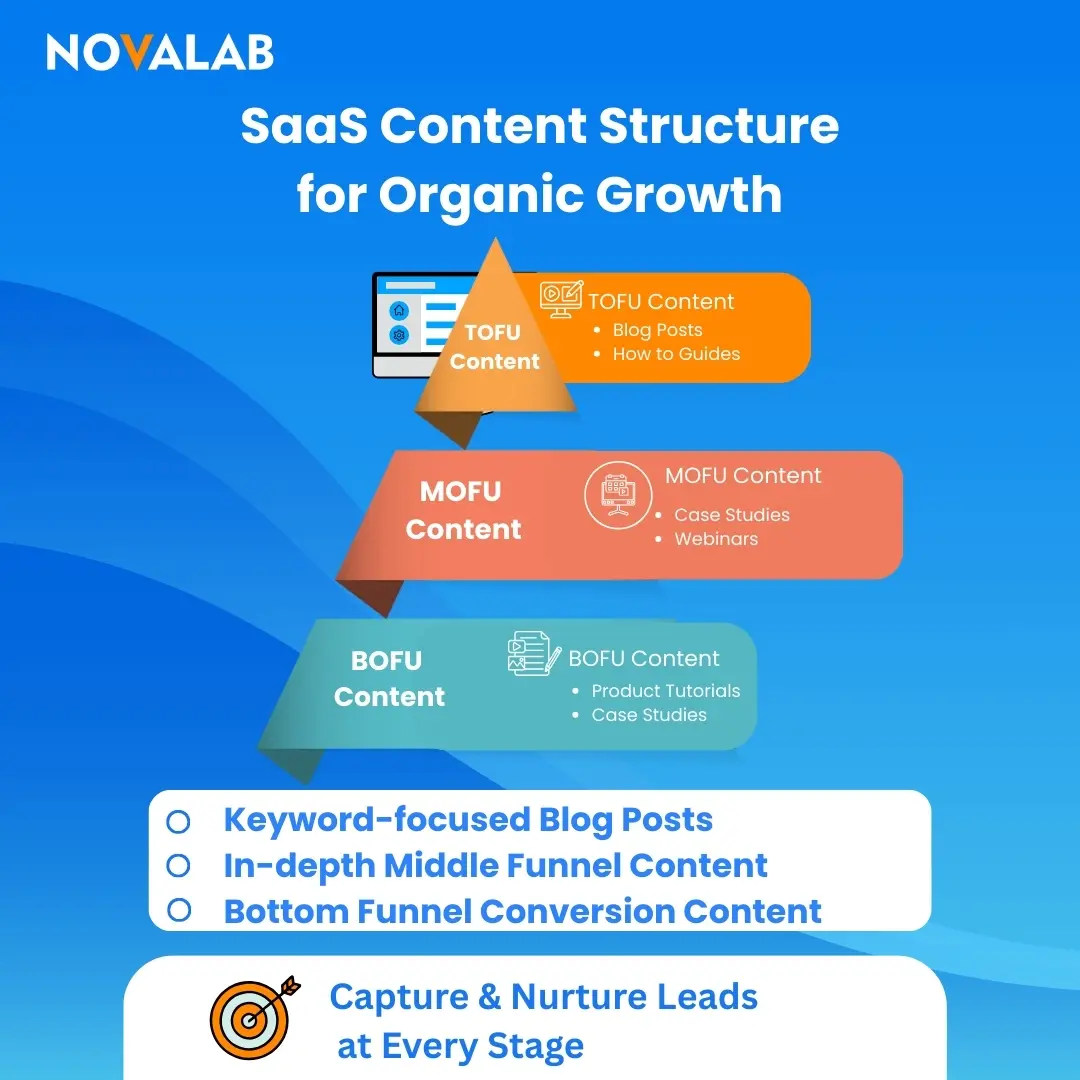
We start with the SaaS buyer decision process: problem identification, solution comparison, product evaluation, then onboarding and usage. Content is mapped to those stages before production begins, so early pages build awareness, mid-stage pages support comparison and late-stage pages support conversion and trust. Keywords are grouped by intent and assigned to a single page, backed by a structured SaaS SEO audit to find overlap and gaps first.
Instead of isolated blog posts, we build topic clusters. One core page targets a main commercial query, such as a use case, product category or comparison page. Supporting pages answer related questions and link toward it, so authority flows to the pages tied to revenue.
Internal links are placed by user intent, not convenience. This strengthens commercial pages, connects related topics logically and removes orphaned content.
SaaS products change often, and content has to stay accurate. We review content regularly to update outdated information, merge overlapping pages and adjust based on ranking and conversion data. This protects rankings and prevents content decay. Teams that also want visibility in AI answers can pair this with guidance on ranking in ChatGPT.
We measure success through business outcomes: organic signups and demo requests, conversion paths from content pages, assisted conversions and retention signals influenced by educational content. When content marketing for SaaS works, organic growth lines up with revenue growth.
As your team grows, the system needs rules. We define content ownership, keep keyword assignment disciplined, standardize internal linking and align content with product changes. That prevents overlap as more people publish.

Each deliverable is built to support one thing: qualified demand from organic search.
We make sure content pages are crawlable, indexable and fast, with clean site structure and internal linking that passes authority to your use case, product and comparison pages.
We research queries around software comparison, tool selection, feature evaluation and setup, then group them by intent and assign each to a single page to avoid overlap.
We plan and produce use case guides, comparison pages, product education content and problem-focused guides that explain how your product fits real workflows.
We strengthen the pages tied to revenue through intent-based internal links and the topical depth of each cluster, so core commercial pages carry the most authority.
Every deliverable is reviewed against signups, demos and pipeline, not traffic alone.
The fastest onboarding on Earth. Your SEO program starts the day after you sign.
Goals, personas, competitors and priority pages.
Search Console, analytics, CMS and rank tracking connected.
Top technical and content fixes, ranked by pipeline impact.
Your first sprint starts on the pages closest to revenue.
| Novalab | Generalist agency | In-house hire | |
|---|---|---|---|
| Time to start | 24 hours | 2–4 weeks | 2–3 months to hire |
| Keywords mapped to SaaS buyer personas | ✓ | ✕ | Depends on hire |
| Technical, content and links in one team | ✓ | ✓ | ✕ |
| Google + AI search (GEO / AEO) | ✓ | Sometimes | Sometimes |
| Reporting tied to pipeline and MRR | ✓ | ✕ | Depends on hire |

Leads Novalab's SaaS SEO programs, from keyword strategy to pipeline reporting.
Can't find your answer? Ask us on a free strategy call.
Book a strategy callContent marketing for SaaS is a system for creating content that answers the questions buyers ask before, during and after software evaluation. A regular blog publishes topics; a SaaS content system maps each page to a buyer stage and a business goal such as signups or demos. The difference is intent control, structure and measurement.
Use case pages, comparison pages, product education content and problem-focused guides tend to perform well. Use case and comparison pages capture high-intent searches close to a decision, while setup guides support onboarding. Many of these pages are most effective when they sit inside a SaaS SEO audit informed plan.
We track organic signups and demo requests, conversion paths from content pages, assisted conversions and retention signals influenced by educational content. Pageviews alone are not treated as success. The aim is to show how content contributes to revenue.
If you want content to become a steady source of qualified organic demand, Novalab can build the system with you. We map intent, structure your clusters and measure results against pipeline. Contact our team to book a free strategy call.