



Onboarding done in 24 hours
Kick-off, access, tracking and the first audit completed within 24 hours, so your community platform starts winning search on day one.
See the 24h onboarding →
Community managers, customer success leads and membership teams research platforms long before they book a demo. They search for engagement fixes, retention tactics and software alternatives. If your platform is missing from those searches, a competitor earns the buyer's trust first and wins the demo.
Novalab builds community management SaaS SEO around buyer intent, not raw traffic. We map the searches that lead to trials and demos, fix the technical issues that block indexing, and build the commercial pages closest to revenue. If you want a broader view of how we work, see our SaaS SEO agency approach.
Kick-off, access, tracking and the first audit completed within 24 hours, so your community platform starts winning search on day one.
See the 24h onboarding →We separate early research searches from software-evaluation searches, so each page targets a buyer at the right stage and points to the next step.
See the approach →Use-case, feature and alternatives pages capture high-intent demand, so more demos come from organic search instead of paid spend.
See how →Community software solves problems buyers already know they have: low engagement, member churn, weak moderation and no way to prove community ROI. Each problem creates its own search demand, from early questions like “how to increase community engagement” to late-stage searches like “community management software pricing.” Our membership management SaaS SEO work shows how close these categories sit and how different their buyers are.
Keyword volume alone is a poor guide here. A community platform selling to enterprise customer success teams has a different buyer, budget and vocabulary than a creator-focused membership tool. A high-volume term can bring thousands of visitors who will never buy, while a narrow search can bring a buyer ready to book a demo.
That is why a generic plan of publishing more articles falls short. The site needs a connected set of pages that moves a Head of Community from problem awareness to product evaluation, with a clear path to a demo or trial at the end.
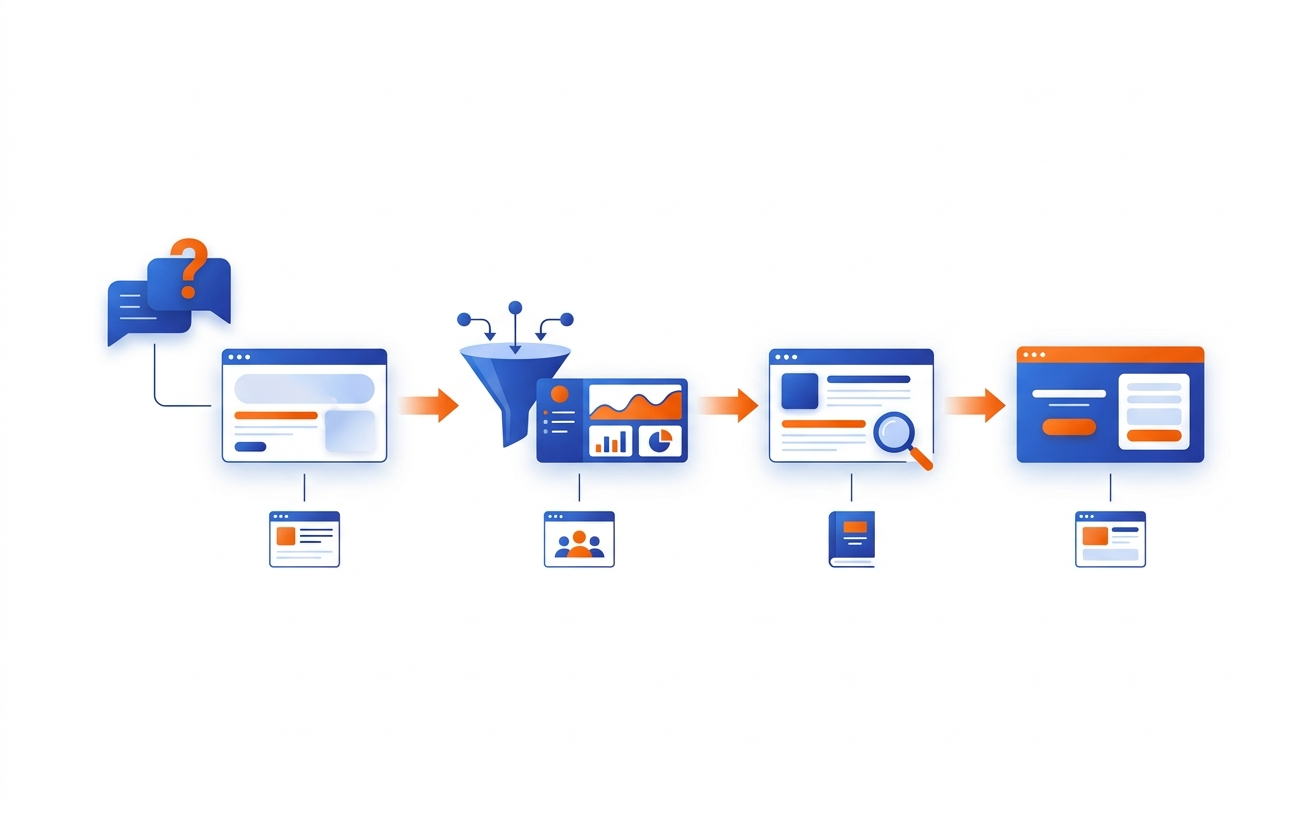
We start with keyword research built on your product, buyer and business model. We ask who signs the contract, who uses the platform daily, which tools you replace and which searches signal buying intent. This is the same method behind our employee engagement SaaS SEO work, adapted to community buyers.
Then we build the pages closest to revenue: alternatives pages, use-case pages for customer, developer and partner communities, and feature pages for analytics, moderation and automation. Educational content on engagement, retention and community ROI supports these pages and links readers toward them, so informational traffic leads somewhere useful.
We measure the work by trials, demo requests, pipeline and revenue, not by rankings alone. A page that ranks lower but steadily produces demo requests is worth more than a top-ranking page that attracts the wrong audience.
Community platform sites are often technically complex, with resource libraries, integration directories, documentation, help centers and JavaScript-heavy pages. We review crawlability, indexation, canonical tags, sitemaps, redirects, rendering and internal linking, and we fix the problems that stop important pages from being found, not every warning a tool flags.
Authority matters too, because competitive category terms need credibility signals. Community companies can earn links through original assets such as engagement benchmark reports, community ROI calculators, templates and industry surveys. A proprietary benchmark gives other sites a reason to cite you, which a generic explainer rarely does.
Internal links tie it together. An article on member retention should lead to your analytics feature page, a relevant use case or an alternatives guide, giving the reader a logical next step and helping search engines see which pages matter most.

Each engagement covers the work that connects community searches to demos and revenue.
A crawl and indexation review of your resource library, integration pages and documentation, with fixes for rendering, canonicals, redirects and internal linking.
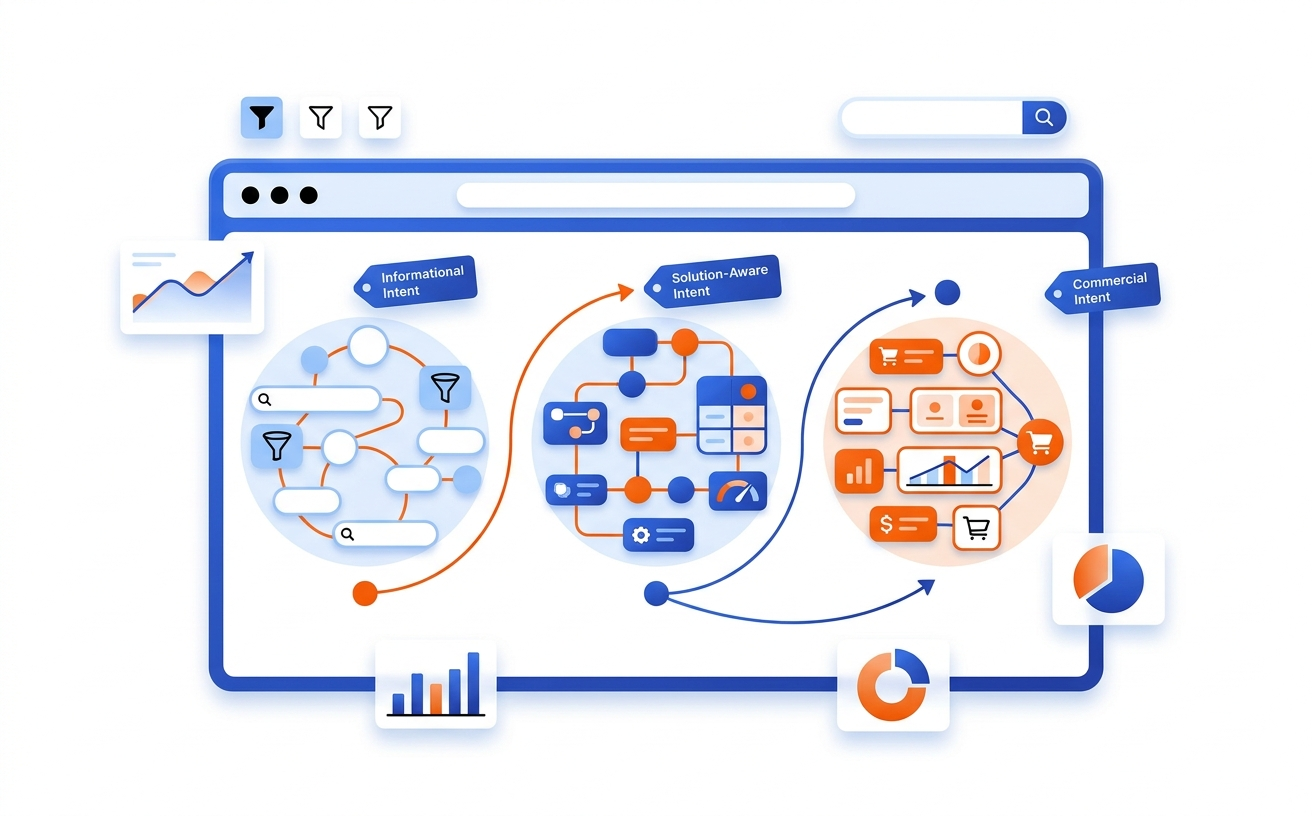
A keyword map across informational, solution-aware and commercial intent, tied to community buyer roles, use cases, features and alternatives.
Use-case, feature, alternatives and educational pages on engagement, retention, moderation and analytics, built to lead readers toward a demo or trial.
Relevant backlinks and original assets, such as community benchmark reports and calculators, that strengthen your commercial and informational pages.
Every deliverable is tied back to trials, demo requests, pipeline and ARR, so you can see how organic search affects revenue.
The fastest onboarding on Earth. Your SEO program starts the day after you sign.
Goals, personas, competitors and priority pages.
Search Console, analytics, CMS and rank tracking connected.
Top technical and content fixes, ranked by pipeline impact.
Your first sprint starts on the pages closest to revenue.
| Novalab | Generalist agency | In-house hire | |
|---|---|---|---|
| Time to start | 24 hours | 2–4 weeks | 2–3 months to hire |
| Keywords mapped to community manager personas | ✓ | ✕ | Depends on hire |
| Technical, content and links in one team | ✓ | ✓ | ✕ |
| Google + AI search (GEO / AEO) | ✓ | Sometimes | Sometimes |
| Reporting tied to pipeline and MRR | ✓ | ✕ | Depends on hire |

Leads Novalab's SaaS SEO programs, from keyword strategy to pipeline reporting.
Can't find your answer? Ask us on a free strategy call.
Book a strategy callCommunity management SaaS SEO is the work of improving a community software company’s organic visibility for searches its buyers actually make. It covers technical SEO, keyword research, commercial landing pages, content, internal linking and authority building. The goal is qualified trials and demos, not only traffic. Our NPS software SaaS SEO page shows how we apply the same thinking to another feedback-driven category.
Target a mix of informational topics, product-category terms, use cases, features, integrations and alternatives. Examples include community engagement strategies, online community platform and community software alternatives. The right mix depends on your ideal customer, positioning and sales cycle.
Not necessarily. Competitor research is useful for finding keyword gaps, backlink opportunities and unserved topics. You can capture high-intent demand with alternatives pages, use-case pages and feature pages without building direct brand-versus-brand content.
Community management buyers are already searching for ways to improve engagement, retention, moderation and reporting. The opportunity is to be there when they do. Contact Novalab to find where the biggest organic opportunities are for your site and how to turn them into demos and pipeline.