




Onboarding done in 24 hours
Kick-off, access, tracking and the first audit completed within 24 hours, so your website starts winning search on day one.
See the 24h onboarding →
Canonicalization issues SEO problems split authority across many URLs and confuse search engines about which page to rank. The wrong version shows up, traffic drops, and revenue follows. If your best page keeps losing to a duplicate of itself, your competitors collect the clicks you should be getting.
Novalab fixes canonical problems with clear technical work. We crawl your site, find duplicate clusters and conflicting signals, and align canonical tags, redirects, internal links and sitemaps behind one preferred URL. This sits inside our wider SaaS SEO agency work, so every fix ties back to indexing, rankings and growth in traffic and income.
Kick-off, access, tracking and the first audit completed within 24 hours, so your website starts winning search on day one.
See the 24h onboarding →We crawl your site and review canonical tags, redirects, internal links and XML sitemaps to see exactly where authority is being split across duplicate URLs.
See the approach →Consolidating signals lets link equity build on the primary URL. That means more stable rankings, faster indexing of key pages and more qualified traffic that turns into leads and sales.
See how →Canonicalization tells search engines which URL is the main version of a page. When several versions exist, search engines must choose one, and if your signals are unclear they may choose the wrong page. A site can load on HTTP and HTTPS, with and without www, and e-commerce filters can add thousands of URL variations. Fixing this starts with a proper SEO audit checklist that covers every duplicate cluster.
When duplicate pages exist, authority does not flow to one strong URL. It spreads across many versions, so none of them performs well. Link equity gets diluted and crawl budget gets wasted on pages that should never have been indexed.
Internal links make it worse. If they point to different versions of the same page, search engines receive mixed signals and indexing becomes inconsistent. The wrong version can then appear in search results, and users may land on a page with tracking parameters or filters. That hurts trust and reduces conversions.
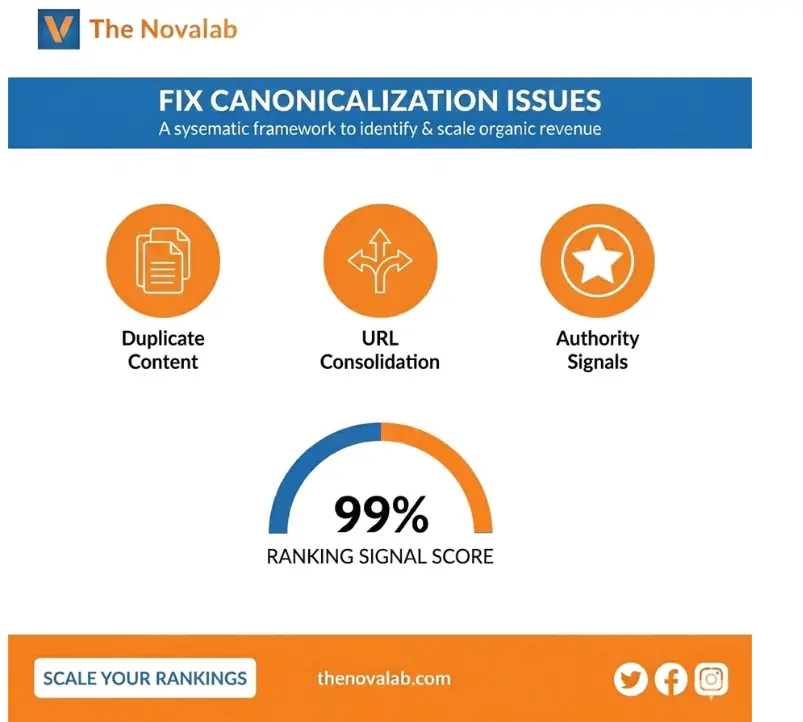
First, we crawl your site and identify duplicate clusters and conflicting signals. We review canonical tags, redirects, internal links and XML sitemaps so we can see where authority is being split. This is the kind of work covered by our on-site SEO guide, applied to your actual templates and landing pages.
Next, we review rel canonical tags across templates and landing pages. If tags point to the wrong URL, we correct them, and if they are missing, we add them. We also implement 301 redirects where needed, for example consolidating HTTP to HTTPS and non-www to www, so link equity flows into one version instead of many.
For sites with filtered navigation, we define rules for which pages should be indexed and which should not, so search engines focus on high-value URLs. Then we align XML sitemaps with canonical URLs and update internal links to point to preferred versions, so every signal supports one main page.
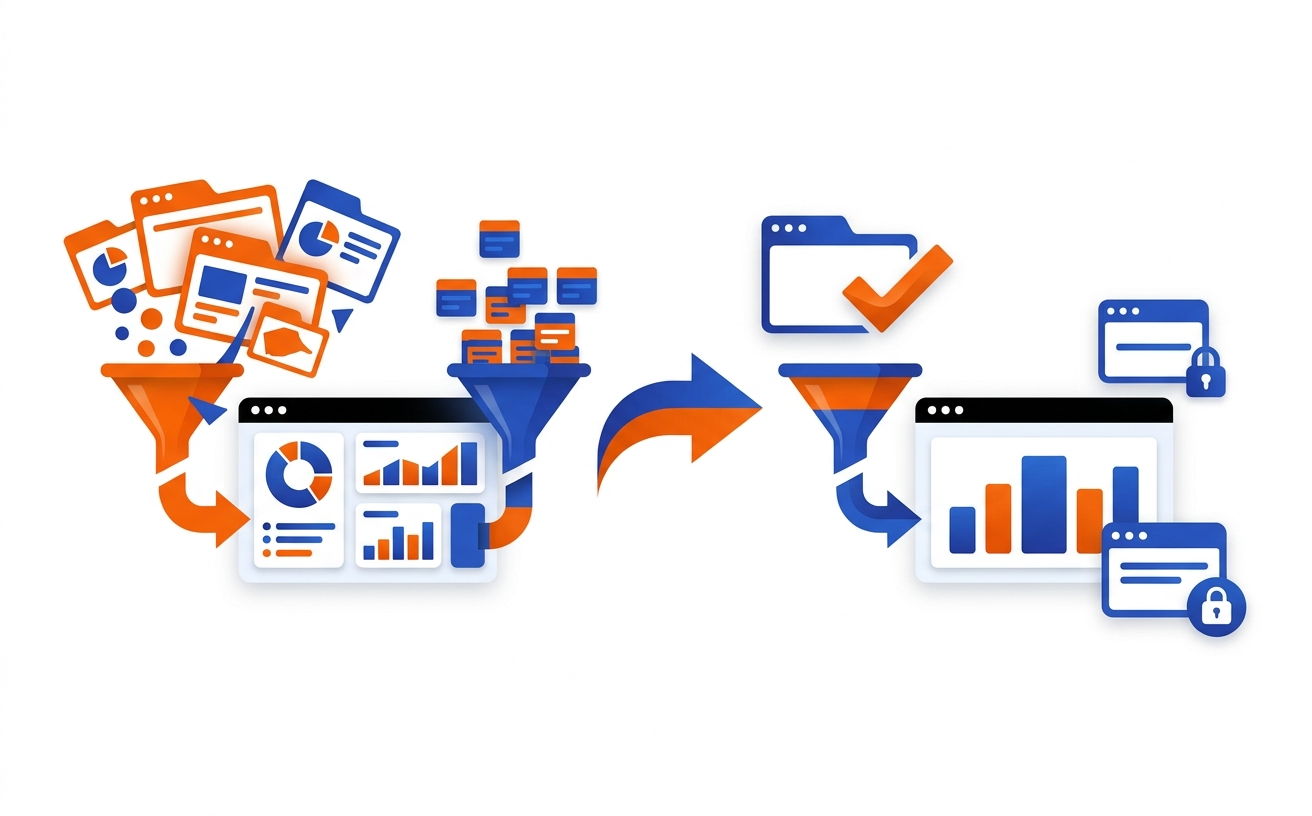
When canonical signals are clear, rankings become more stable. Link equity strengthens the primary URL and crawl paths get cleaner. As a result, search engines can index important pages faster. Stronger indexing leads to higher visibility, higher visibility brings more qualified traffic, and more traffic creates more leads and sales.
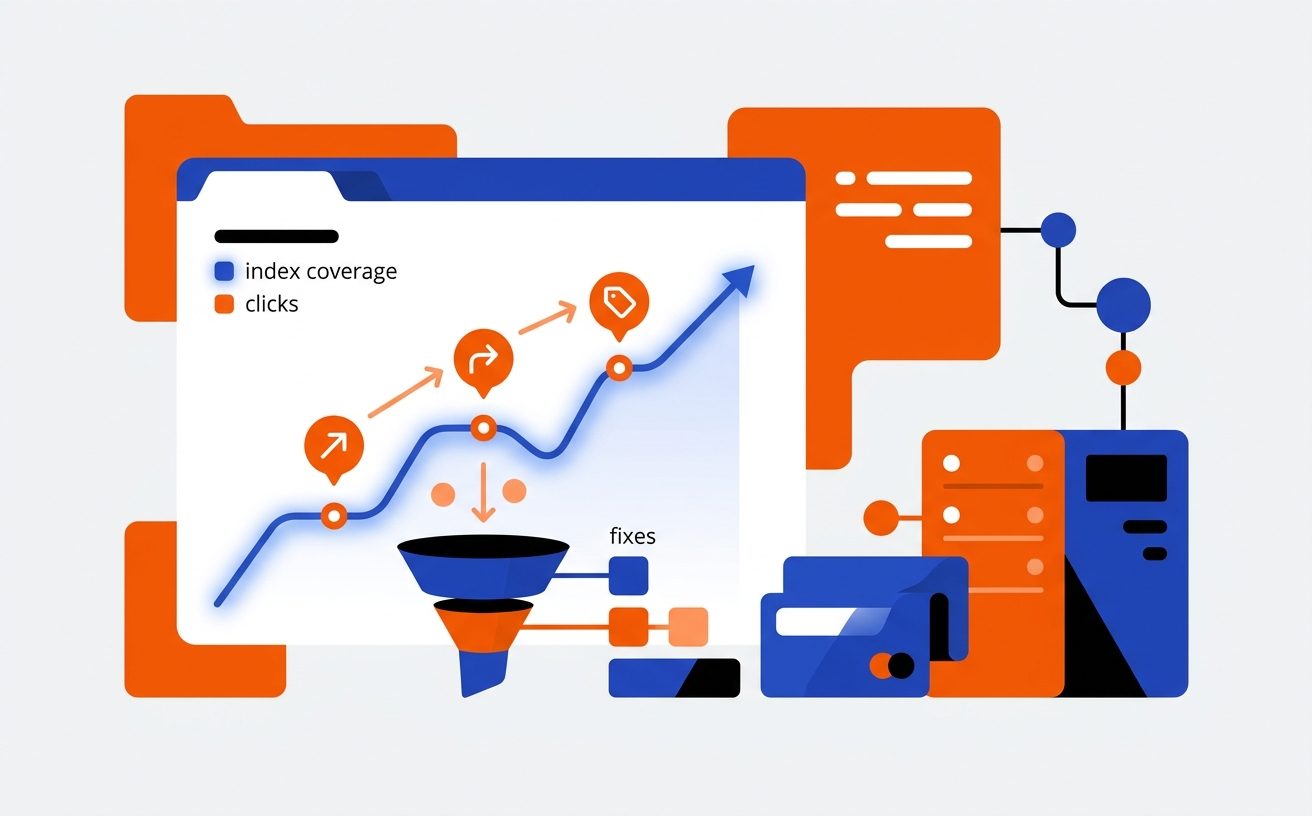
Our process starts with a benchmark of current index coverage and rankings. Then we map duplicate URLs and define priority fixes, deploy structured updates, and monitor Search Console to confirm improvements. If your catalog uses templated pages at scale, our work on programmatic SEO shows how clean canonical rules keep those pages from competing with each other.
Canonical problems can return after site changes, so we also provide ongoing monitoring. This protects rankings during redesigns, migrations and content expansion, so a launch does not quietly undo months of work.
Every engagement covers the technical fixes that make search engines trust one preferred URL for each page.
A full crawl and URL review, corrected rel canonical tags, aligned 301 redirects and rules for parameter and faceted URLs, so duplicates stop competing with your primary pages.
We map each priority keyword to a single preferred URL, so search engines and internal links all point to the one page meant to rank for it.
We update page templates and internal links so they reference canonical URLs, and align XML sitemaps so only preferred versions are submitted for indexing.
By consolidating duplicate versions, link equity flows into one strong URL per page instead of being spread thin, which strengthens the pages you want to rank.
Cleaner signals mean faster indexing, steadier rankings and more qualified traffic, which supports leads, sales and revenue over time.
The fastest onboarding on Earth. Your SEO program starts the day after you sign.
Goals, personas, competitors and priority pages.
Search Console, analytics, CMS and rank tracking connected.
Top technical and content fixes, ranked by pipeline impact.
Your first sprint starts on the pages closest to revenue.
| Novalab | Generalist agency | In-house hire | |
|---|---|---|---|
| Time to start | 24 hours | 2–4 weeks | 2–3 months to hire |
| Keywords mapped to ecommerce and website owner personas | ✓ | ✕ | Depends on hire |
| Technical, content and links in one team | ✓ | ✓ | ✕ |
| Google + AI search (GEO / AEO) | ✓ | Sometimes | Sometimes |
| Reporting tied to pipeline and MRR | ✓ | ✕ | Depends on hire |
Leads Novalab's SaaS SEO programs, from keyword strategy to pipeline reporting.
Can't find your answer? Ask us on a free strategy call.
Book a strategy callCanonicalization issues happen when several URLs show the same content and search engines are not told which one is the main version. Authority spreads across the duplicates, crawl budget gets wasted and the wrong page may rank. Clear canonical tags, redirects and internal links fix this by pointing every signal at one preferred URL.
We review canonical tags, 301 redirects, internal links and XML sitemaps, plus rules for parameters and filtered pages. We then correct tags that point to the wrong URL and add missing ones. For broader maintenance on larger sites, our SEO audit checklist shows how these checks fit into a full technical review.
Yes. Redesigns, migrations and content expansion can reintroduce duplicate URLs or break canonical tags. That is why we monitor Search Console after the fixes and provide ongoing monitoring, so index coverage and rankings stay protected when the site changes.
If your site shows duplicate URLs or unstable rankings, action is needed. Novalab builds strategies that strengthen indexing signals, protect authority and support long-term traffic and revenue growth. Contact our team today to request a free SEO audit or consultation.